On the Shores of Lake Titicaca: Discovering the Llachón Community
A Travelogue and Cultural Exploration of Lake Titicaca.
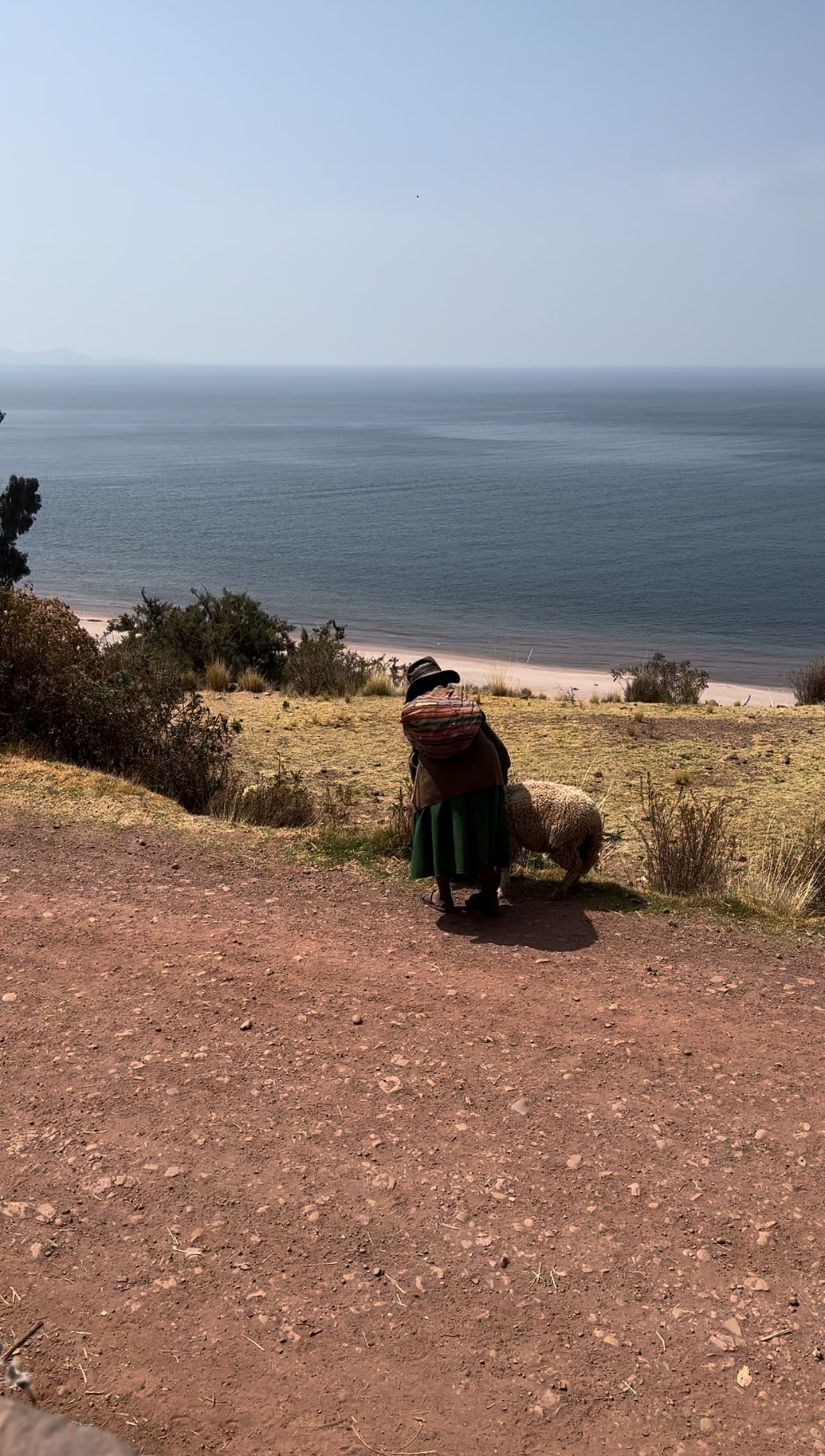
There are landscapes that take your breath away. Encounters that leave a lifelong mark. Experiences that change you. But above all, memories you will never forget. That was the case for us at Lake Titicaca.
Perched at an altitude of 3,810 m in the Andes mountain range, Lake Titicaca is the highest navigable lake in the world. Shared between Peru and Bolivia, it is bordered by communities from the Aymara and Quechua peoples.
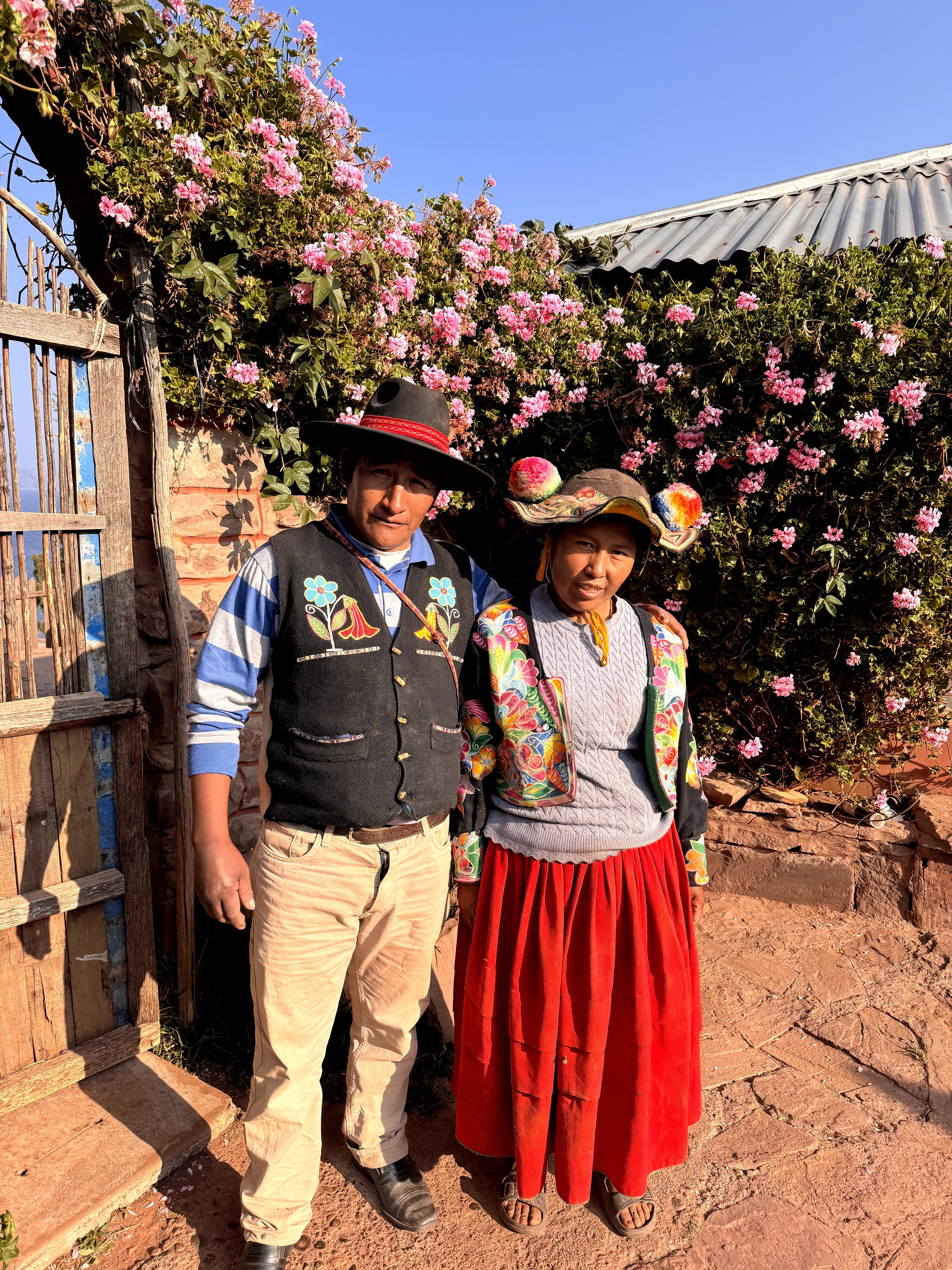
For a few days, we were welcomed into the home of Ruben and Vilma, part of the Llachon, a community on the Capachica peninsula that has been developing a community tourism model since the 2000s. Today, they offer visitors the chance to share in the daily life of the community and provide them with a unique experience.
Behind its idyllic landscape, the lake hides a cultural wealth spanning several millennia, but also challenges that impact its inhabitants. We tell you about our unforgettable experience!
Lake Titicaca, the cradle of Inca civilizations
Lake Titicaca is not just a lake. It is considered by Inca communities to be the cradle of their civilization. In Inca mythology, the god Viracocha is said to have emerged from the depths of the lake to create the sun, Inti, the moon, Quilla, and the stars to illuminate the world. It is also in this region that Manco Cápac, the founder of the Inca civilization, was reportedly born.
When you sail here, you feel the power of these stories: the water and the sky blend together, the silence holds a symbolic meaning, and everything takes on a sacred dimension.
Lake Titicaca is also home to different types of islands:
- natural islands like Taquile and Amantani;
- the Uros islands, which are artificial islands made of totora, a reed that grows and floats on the lake.
An idyllic setting vs. reality: tourism around the lake
While Lake Titicaca attracts many tourists today, the fact remains that mass tourism is altering the authenticity of the place. Certain ancestral practices are becoming "folklorized," transforming centuries-old local cultures into a spectacle for tourists. Some local communities even denounce these practices and refuse to welcome tourists.
Unfortunately, this reality is the other side of the same coin: although local cultures are now more accessible, they are sometimes exploited to serve the tourism interests of dominant groups, to the detriment of their history and the communities that uphold them.
This is why we strongly advise you to do your research before going there. If you want an authentic experience, favor villages that receive few tourists.
Our arrival at Ruben and Vilma's
It was on the Capachica peninsula, 75 km from the city of Puno, that we found ourselves in the village of Llachon, which has 1,300 inhabitants, at Ruben and Vilma's home. Upon our arrival in Puno, a taxi was waiting to take us directly to Llachon, about an hour and a half's drive away.
Arriving at Ruben and Vilma's around 10:00 PM, a hot dinner was waiting for us. We had the chance to get to know our hosts, and then, exhausted by our journey, we headed to our respective rooms.
Discovering the Titinos islands
Early in the morning, we set off with Ruben on his boat to discover the Titinos islands. Upon arrival, we received a beautiful welcome from the community that lives there. They explained how the artificial island is built, using totora reeds that must be renewed over the years. Then, we visited their homes, which are also made of totora. The walls of the houses are covered with clothing to insulate against the cold, which can quickly set in, especially at night.
What struck us on Titinos island is the distinct division of labor between men and women. While the men are busy making children's toys, the women sew sheets and blankets depicting the Pachamama, Mother Earth, an emblematic figure of Andean cultures.
We were also treated to a short ride in a "Mercedes" boat, the large, traditional boats of the lake that locals use to get around. Our captain explained that "Mercedes" boats are used notably to take children to school, or to go to Capachica on Sundays to barter fish for other food items like vegetables or chicken. Furthermore, totora reeds are used not only to build the islands but also for therapeutic practices.
An authentic way of life to preserve
Returning from the Titinos islands, we enjoyed a bracelet-weaving workshop with Vilma. And let us tell you, it was not easy at all. But we were very happy with our little achievements, which we still wear on our wrists today.
At the end of the day, we went fishing, which is a major activity for the lake's inhabitants. However, fishing is becoming increasingly difficult because the lake's water level continues to drop due to global warming, and certain species like salmon are threatened with extinction, causing great concern for the local communities.
The next morning, we went farming with Vilma. We planted fava beans in the earth, and it really wasn't as easy as it might have seemed. But it was fun to try.
After lunch, we gathered around Ruben, who explained the history of the Llachon community to us. Starting with the history of the hats.
The hats of Llachon: when colors tell the year
Like many Quechua and Aymara communities, the Llachon community wears traditional clothing, a testament to their culture that has endured since the dawn of time. Llachon culture draws its roots from ancestral laws, where the figure of Pachamama, represented by women, governs the earth.
However, due to the conquest of the Inca Empire, the Christian religion was passed on to indigenous communities. As a result, a true cultural blending has taken place among the descendants of the Incas, like the Llachon community, who practice the Christian religion while simultaneously invoking the principles of Pachamama.
As Ruben explained, women hold an important, if not sacred, place in the community. The shaman ensures that ancestral laws are respected; if members transgress the laws, they are banished. Despite the patriarchal system that relegates women to the private sphere as "guardians of the home," they have a say in the community, and household decisions are made together. The Llachon are very respectful of women's rights because, due to their sacredness, they are highly protected and respected. If a man were to beat his wife, he would be banished from the community.
Ruben explained to us that before the start of each calendar year, the shaman shapes the villagers' hats, predicting the year to come. Each color has a meaning; for example, green represents agriculture, blue represents Lake Titicaca, pink means marriage, etc. It was fascinating to understand the evolution of the hat colors over recent years.
A lake at the expense of climate change and geopolitical interests
Today, Lake Titicaca is under serious threat of disappearing due to global warming, which has caused a persistent drought in recent years, and pollution coming from urban centers like Puno. It is essential to address these problems comprehensively in order to preserve the health and sustainability of the lake, ensuring access to water and the other benefits it provides to the region's communities.
The frog is sacred to the lake's communities. However, the frog is threatened with extinction, which is evidence of the lake's degradation. Wastewater discharge and waste from homes, hospitals, and mining operations pollute Titicaca and its entire basin. Several studies have already confirmed the presence of heavy metals in its waters, such as arsenic, cadmium, mercury, and lead, among others. Naturally, by breathing through their loose, wrinkled skin, these frogs, which are native and exclusive to the lake, absorb all these pollutants.
Ruben also explained that the water in Lake Titicaca is in peril and continues to dry up, notably due to political issues between the Peruvian and Chilean governments, with the latter receiving larger proportions of the lake at the expense of the communities that live there.
The challenges facing the inhabitants of Lake Titicaca force us to reflect on the impact of global warming, and more broadly, on its consequences for indigenous communities. Preserving this living environment, shaped over millennia, is essential, not only for those who live there, but also for the balance and survival of an entire ecosystem.
Stories get richer with more hands.
A detail, an address, a memory of the same place: write to us and we'll add it at the end of the story, with your name.