Our 16-day itinerary in Peru
A complete 16-day Peru itinerary covering Lima, Huacachina, Arequipa, Colca Canyon, Lake Titicaca, Machu Picchu, and Rainbow Mountain. Discover practical tips, transport advice, and must-see highlights for an unforgettable fast-paced adventure.
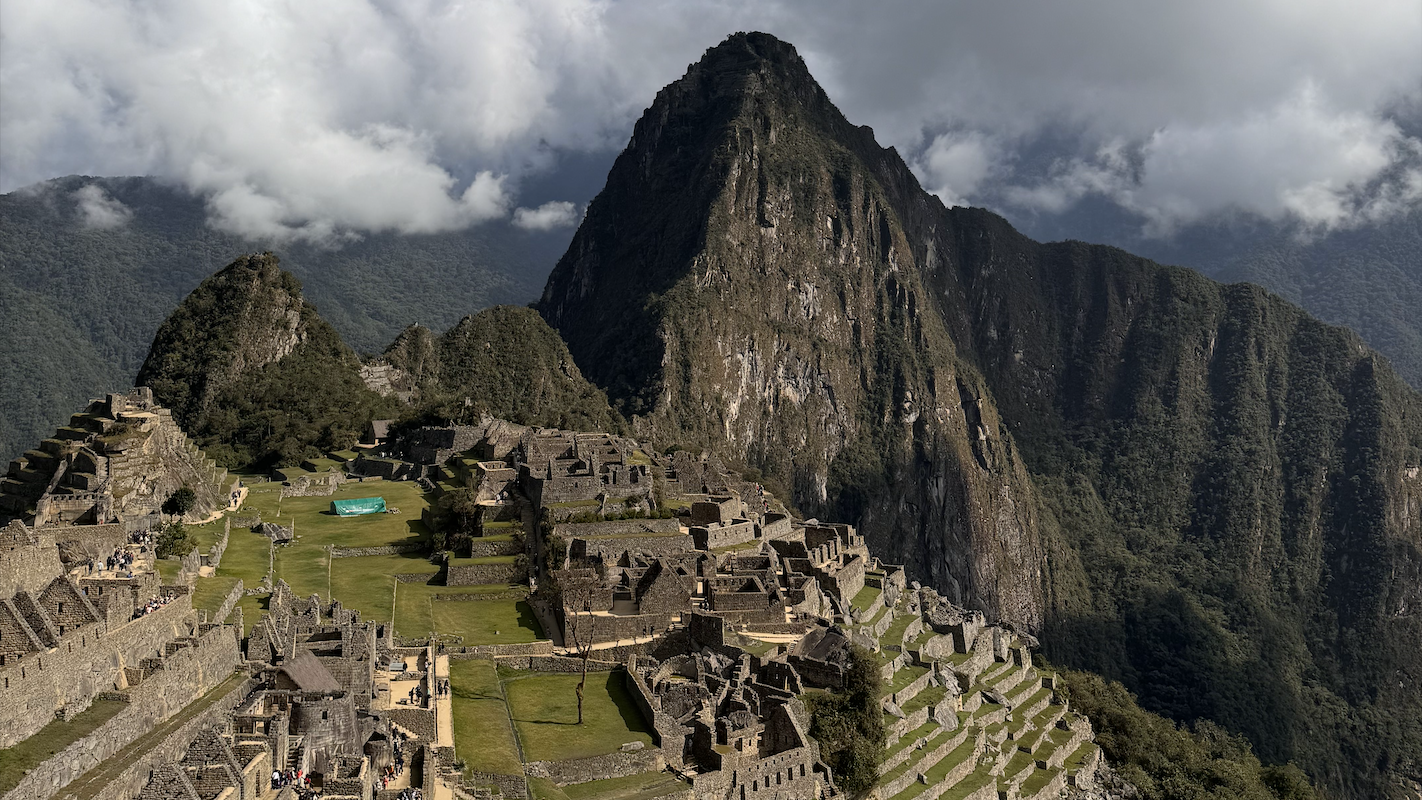
The itinerary · 16 days · 10 stops
Our route, step by step
- Day 1Lima → Ica
Landing in Lima
Landing at 9:30, Pablo waiting with his sign, then straight onto the bus to Ica: five hours towards the desert.
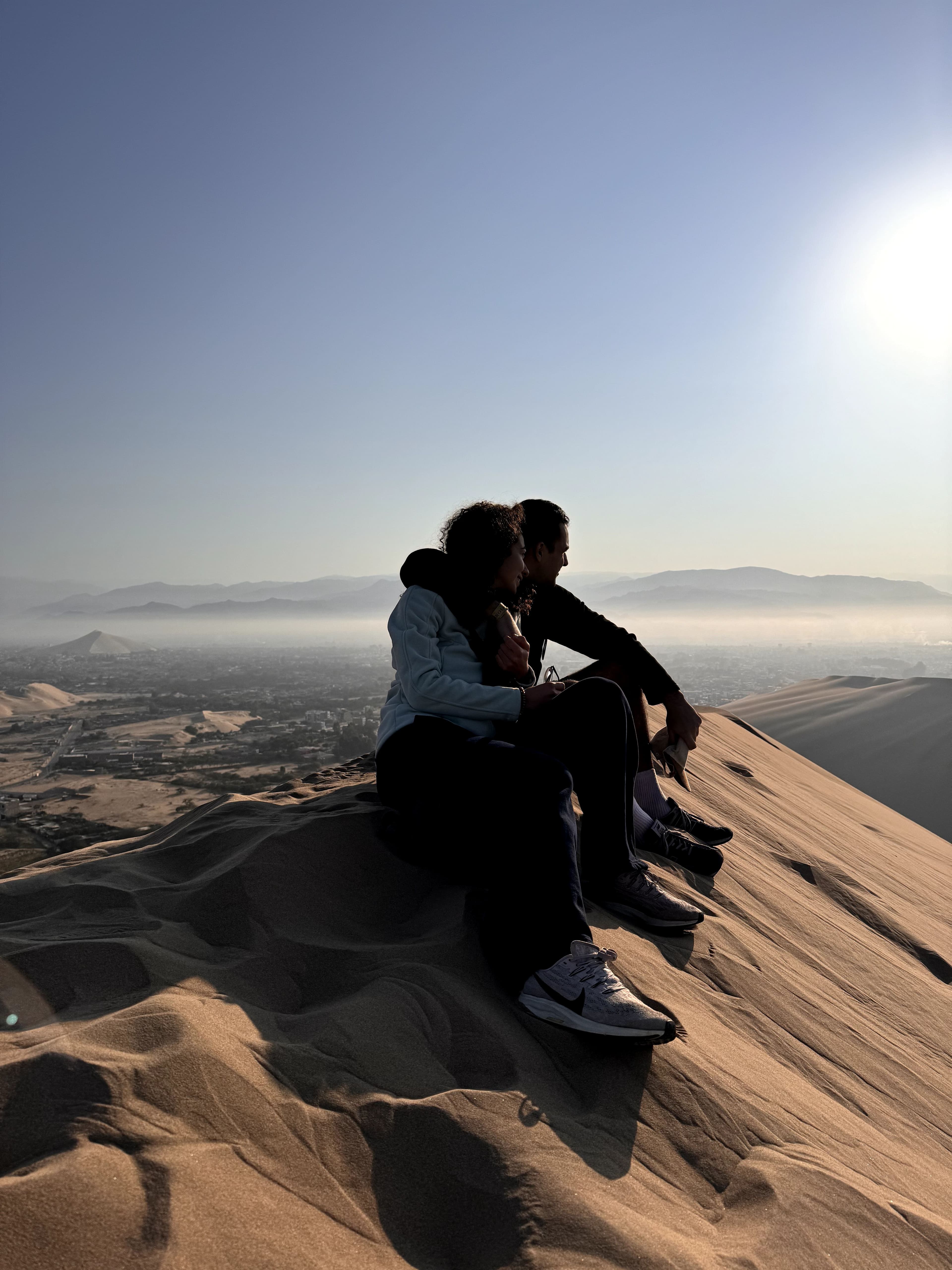
- Day 2Oasis de Huacachina, Ica
Huacachina
Sunrise on top of the dunes, buggy and sandboarding with friends, then a 13½-hour night bus to Arequipa.
- Day 3Arequipa
Arequipa, the white city
A real favourite: Santa Catalina monastery, streets of white volcanic stone and the Picantería Victoria.
- Days 4–6Cabanaconde
Colca Canyon
A night in Cabanaconde, condors at Cruz del Condor, then two days trekking on our own in one of the deepest canyons in the world.
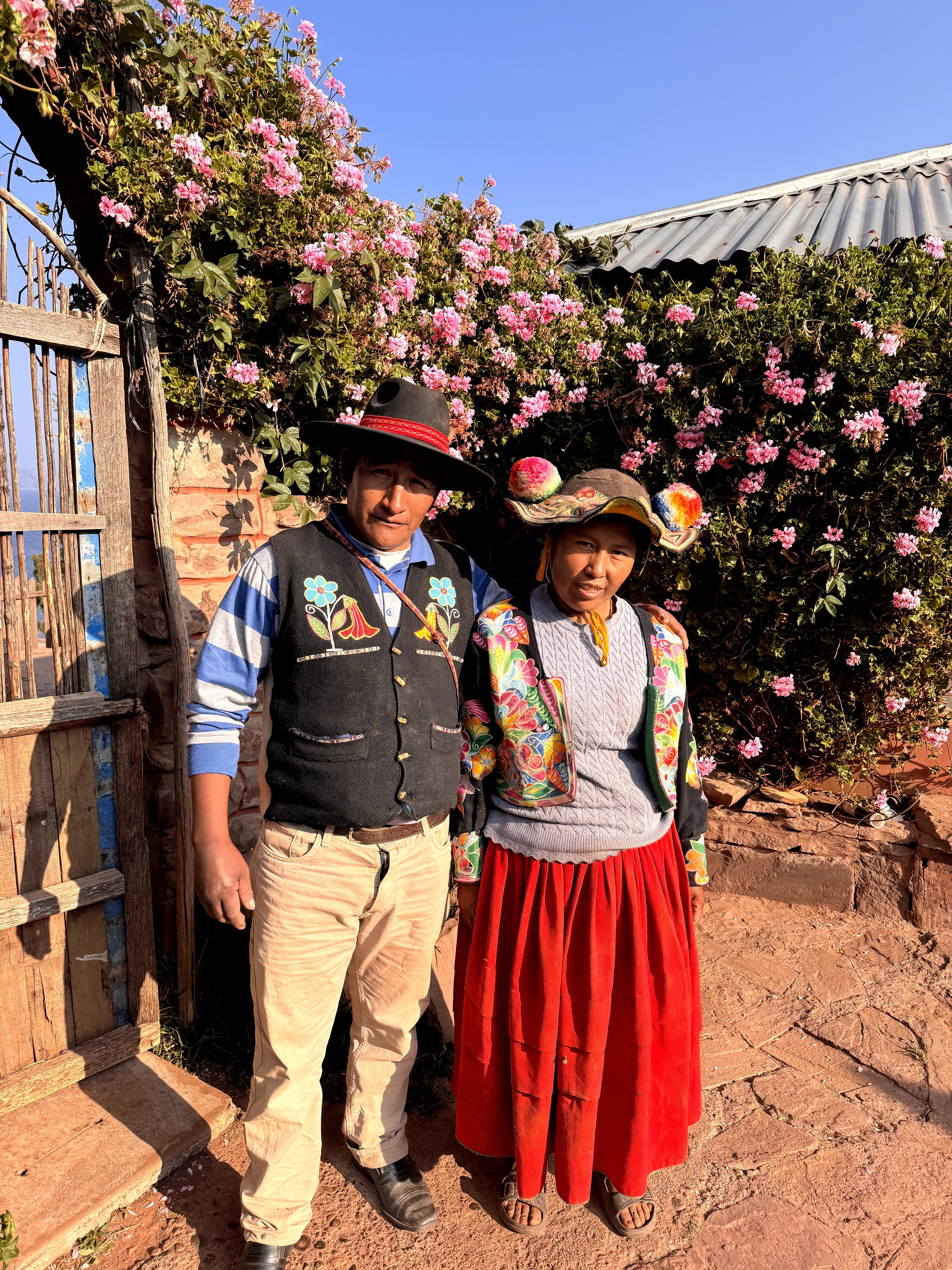
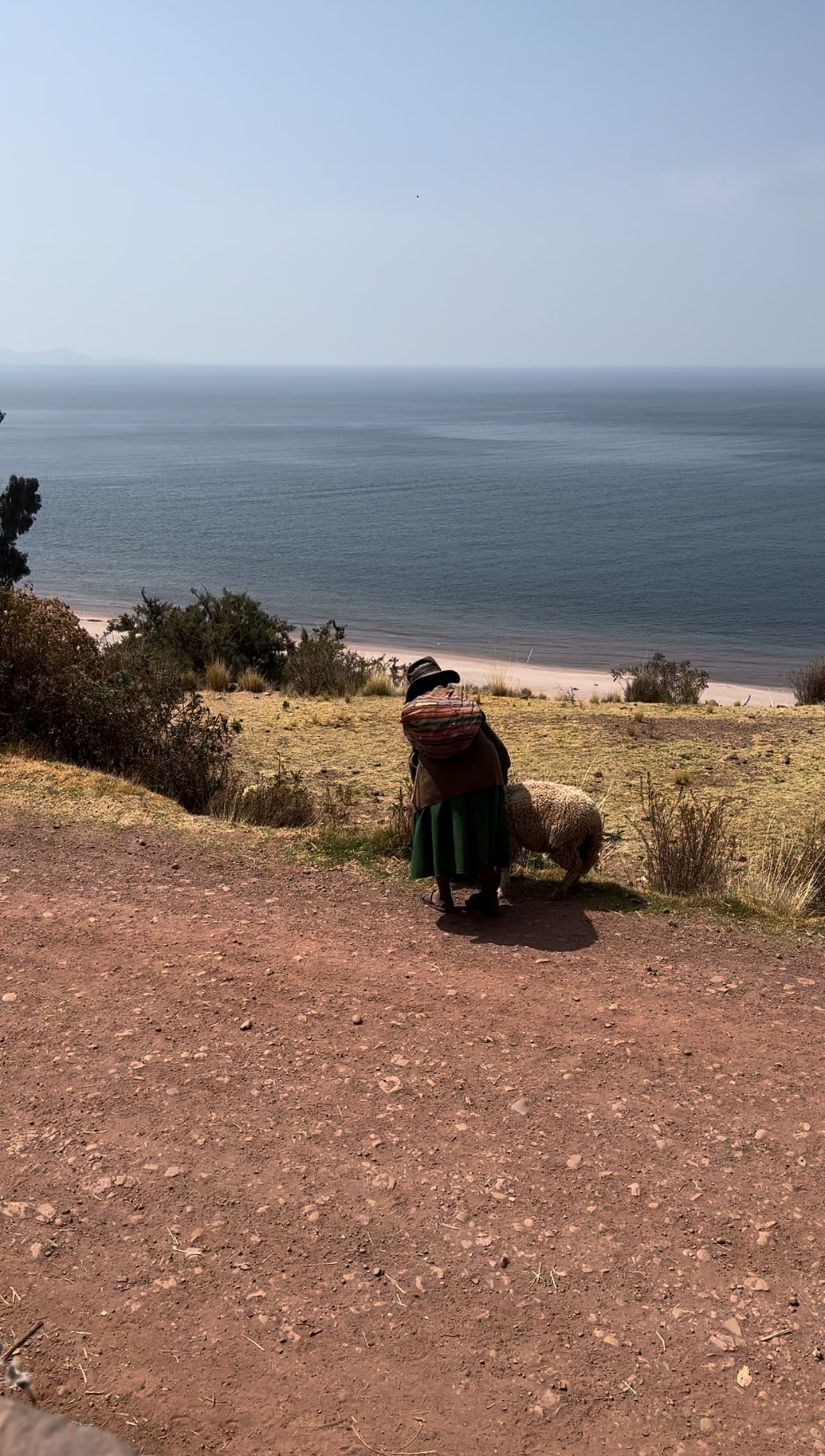
- Days 7–8Péninsule de Capachica
Llachón, on Lake Titicaca
Two days with Ruben and Vilma: the Uros Titinos islands, weaving, fishing, the fields, and memories for life.
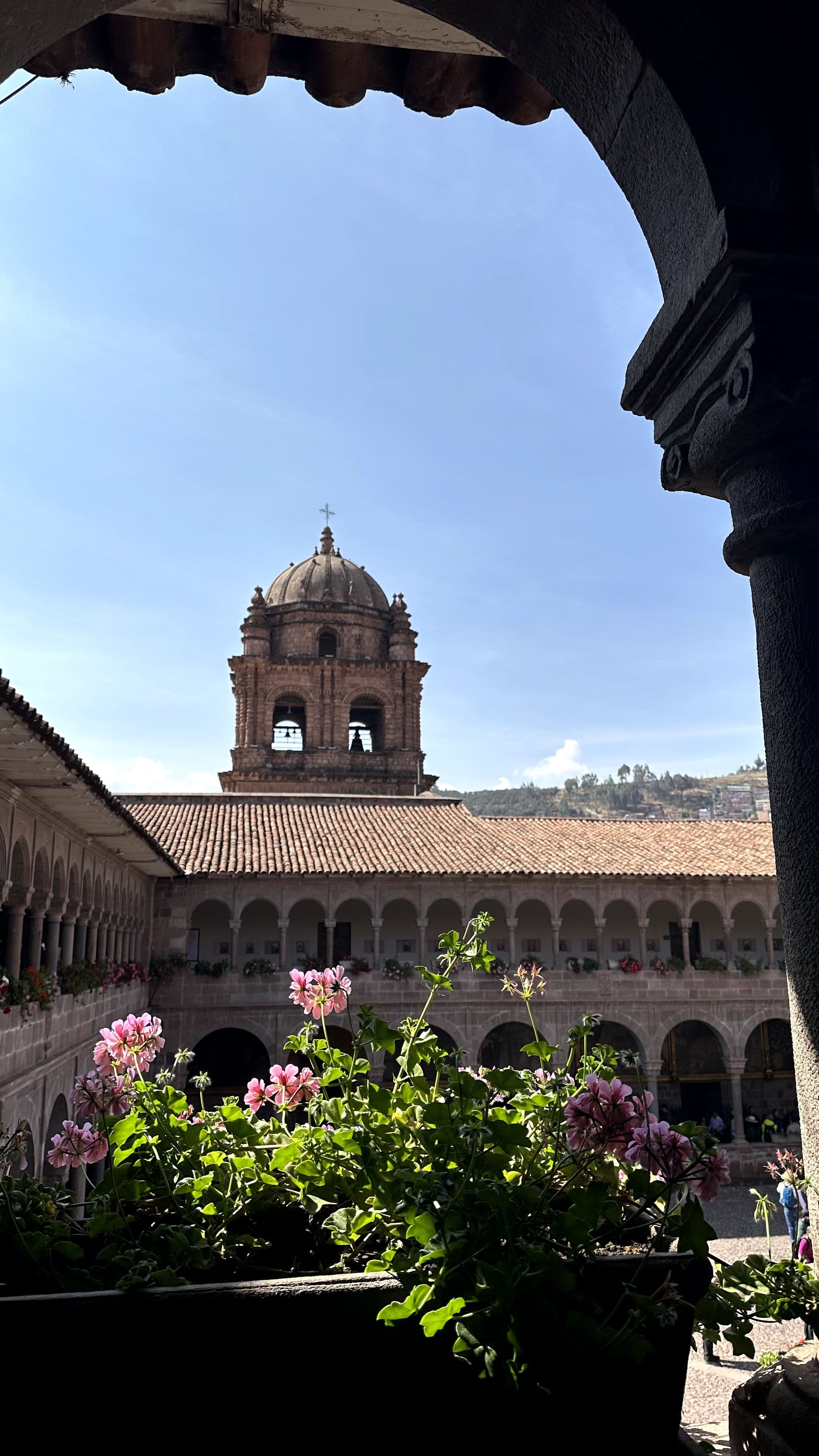
- Day 9Cuzco
Cusco
The old Inca capital: the Inka museum, the alleys, the souvenir shops, and a warm welcome at Casa Antade.
- Day 10Moray, Maras, Chinchero, Ollantaytambo
The Sacred Valley
Moray's terraces, the Maras salt pans, Chinchero's market and the Ollantaytambo fortress in a single day.
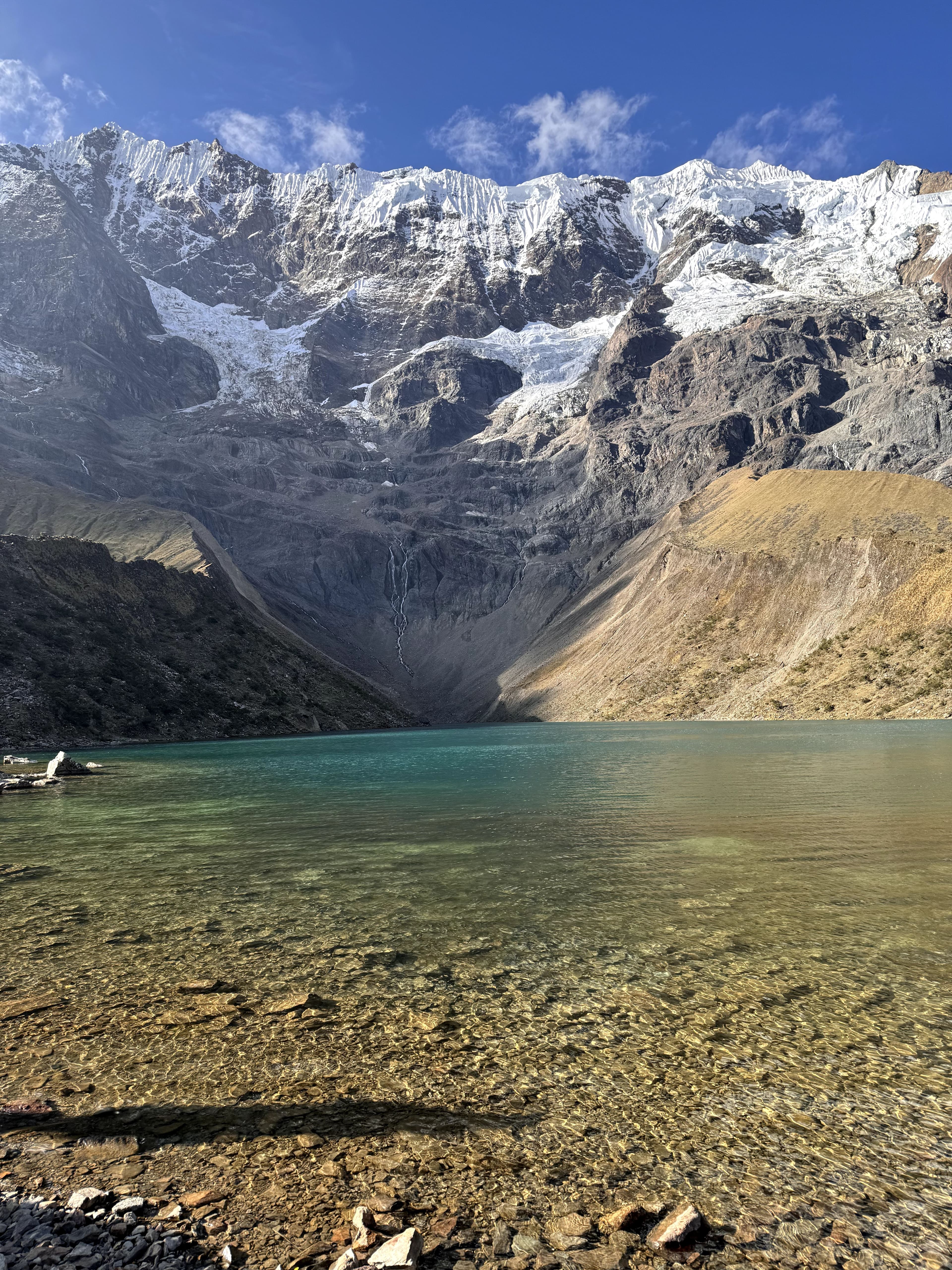
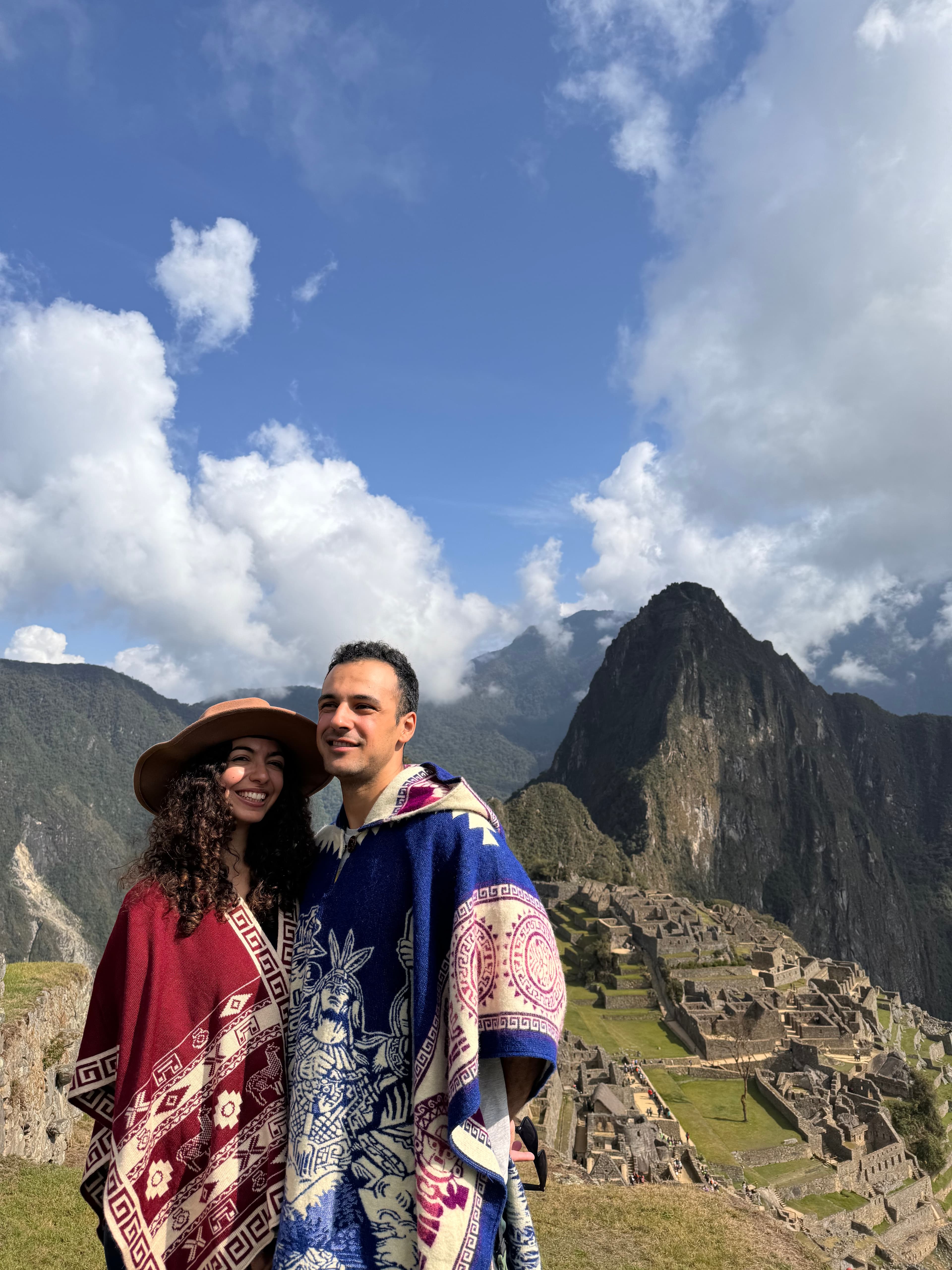
- Days 11–14Salkantay → Machu Picchu
Salkantay trek to Machu Picchu
70 km from the Humantay lagoon down to the jungle, the altitude in our legs, and Machu Picchu at the end of the trail.
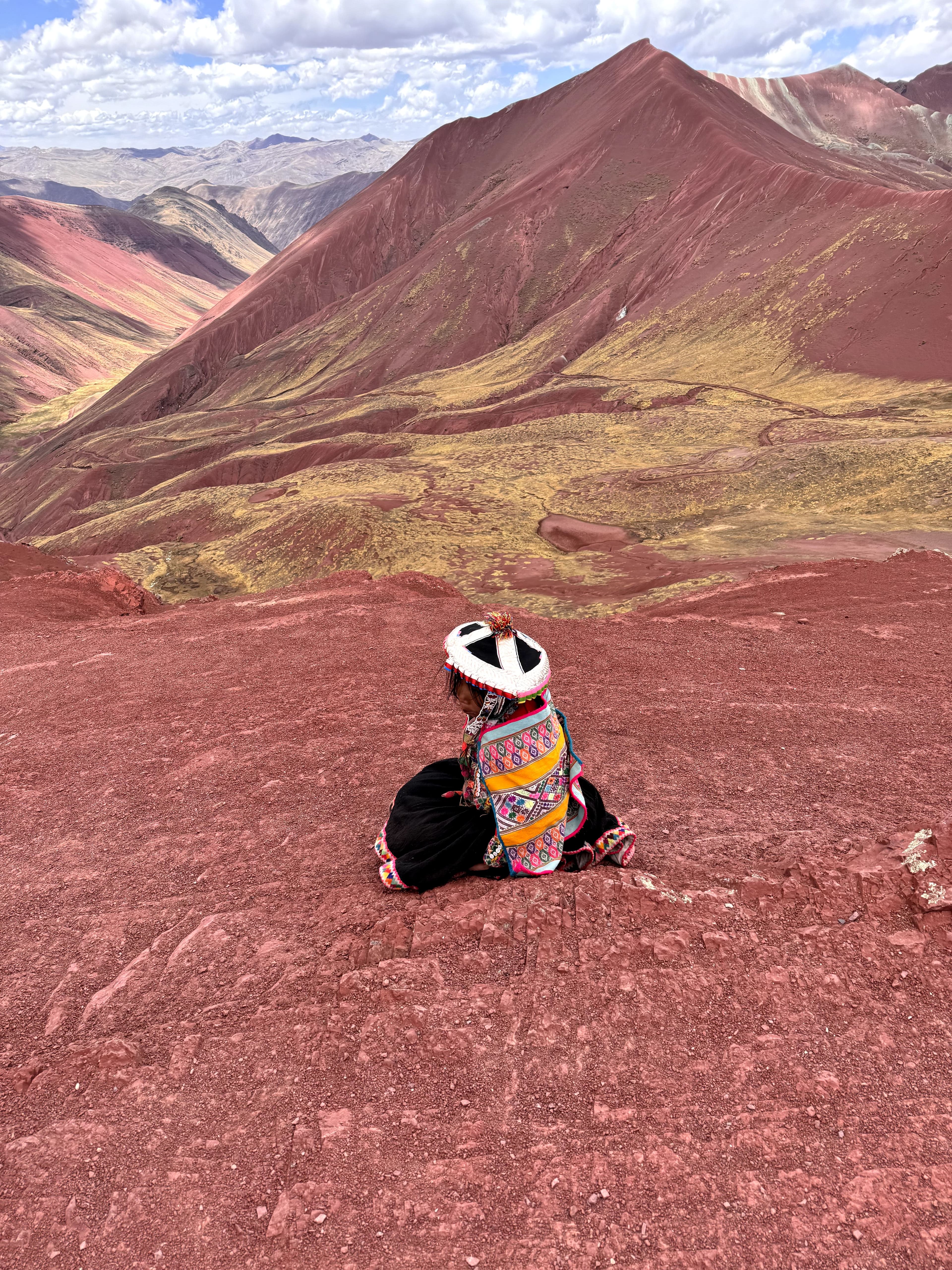
- Day 15Vinicunca
Rainbow Mountain and the Red Valley
Up to 5,036 m, then twenty more minutes to the Red Valley: no one around, and even wilder ochres.
- Day 16Miraflores, Barranco
Back to Lima
Last day: Miraflores, Barranco, seafood at Punto Azul and the Malecón facing the Pacific.
At the end of September 2024, we spent 16 days in Peru, a country teeming with true marvels. This country is so diverse with such crazy landscapes that differ from one region to another, that it felt like we were visiting several countries!
If you have little time like us, we advise you to be careful and plan your itinerary accordingly, because the distances are very long and you still depend a lot on public transport, which can sometimes be scarce. You will sometimes have to make choices and sacrifices that are difficult to make. But in any case, this will not prevent you from seeing wonders and enjoying it to the fullest like we did 😊.
Day 1: Arrival in Lima
We arrived in Lima at 9:30 AM. At the airport, our taxi driver, Pablo, was waiting for us with a sign.
Leaving the airport, we headed to the Javier Prado bus terminal where we took a bus to Ica to get to the famous Huacachina desert. We advise you to book your bus directly at the station because there are buses every hour, which gives you flexibility in case of the unexpected.
Lima is a huge city and you should allow a good hour between the airport and Javier Prado.
The Lima – Ica bus takes about 5:00. Once you arrive in Ica, you will easily find taxis at the station to take you to Huacachina. The trip takes about fifteen minutes and costs 20 soles (7.5 CAD). This is the standard price offered by taxi drivers.
Day 2: Huacachina
We recommend climbing the dunes for sunrise. It is absolutely magical. Allow a little time if you want to arrive for the sunrise because the 400 m climb in the sand is still tough! But the reward is worth it.
In the morning, we were able to go dune buggying and sandboarding! It was so much fun!! You can find several companies offering these activities in Huacachina. For our part, we paid 100 soles per person (there were 4 of us) for a private tour that lasted a good two hours. It was worth it because we were with friends and it avoided having too many people in the buggy. We really made the most of it!
At the end of the day, we headed back to Ica to take a 13:30 night bus to Arequipa (phew, that's a tough one). Honestly, this option is really not bad when you don't have too much time there. We recommend favoring the Cruz del Sur bus company, which are really clean, comfortable, and punctual.
Day 3: Arequipa
Arequipa was a real favorite of ours. The historic district is a marvel, with its streets, museums, and restaurants. Nestled at an altitude of 2,300 m, the city is surrounded by three volcanoes. Moreover, the city walls are made from white volcanic rock, which is why it is given the name "ciudad blanca", the white city.
Arequipa is the second largest city in Peru. It means "near the mountain" in Quechua.
If you have little time, one day will be enough to visit the city.
Here are our must-sees:
- Santa Catalina Monastery: the jewel of Arequipa. It is the largest monastery in the world, and is classified as a UNESCO World Heritage Site. The monastery is known for its colorful Andalusian-style alleys.
- The San Francisco Complex: Dating from the 16th century, the religious complex includes both the San Francisco church and convent. Renowned for its impressive Baroque style, it features intricate details that will captivate anyone interested in colonial history and art.
- The Cathedral of Arequipa: another treasure of Arequipa. This cathedral was built in 1544, during the invasion of Spanish colonists. The cathedral was completely destroyed in 1544 following an earthquake and was then rebuilt.
You can also visit the museum that adjoins the cathedral and is included in the visit.
- Fundo el Fiero, the artisanal market: the artisanal market is located next to the San Francisco Complex and offers plenty of beautiful Peruvian artisanal souvenirs. It's worth the detour!
- Stroll through the historic center and the Plaza de Armas: what could be better than getting lost in the streets of Arequipa to appreciate its charm and its good energy.
If there is one restaurant we can recommend to you in Arequipa, it's the Picanteria Victoria. It is quite original because it offers dishes dating from different eras, from the pre-Hispanic period to now. The dishes are refined, beautifully presented in a beautiful setting with a view of the San Francisco Complex.
Day 4: Departure for Cabanaconde (Colca Canyon)
The Colca Canyon is the second deepest canyon in the world with a depth of 3,270 m.
Some choose to take a bus at 3:00 AM from Arequipa to go to the Canyon and start the trek directly. For our part, we preferred to go during the day and sleep there to be in top shape for this very demanding physical exercise.
Don't stress about buying your tickets in advance. At the Terminal Terrestre in Arequipa, you have a wide array of bus companies offering tickets to Chivay and Cabanaconde. The duration of the bus ride is really not to be overlooked since it is about 6:00. Upon arriving at the Canyon, the bus makes a first stop in Chivay; whatever you do, don't get off there if you plan to do the trek because Chivay is a 1 hour and 20-minute bus ride from Cabanaconde, which is the starting point.
Arriving in Cabanaconde, we stayed one night at the Pachamama Home hostel, which we highly recommend. The hosts are very friendly, give you advice on the different treks, and the value for money is good.
Days 5 and 6: Trekking in the Colca Canyon
You can ask the hosts at your hostel to order a taxi for you to go to the Cruz del Condor Mirador to see the Andean condors, those large birds measuring 1.30 meters.
The Colca Canyon offers different treks that skirt the valley. If you have more time, we recommend visiting the canyon over 3 days. But if you are limited like us, two days is more than enough. You can very easily do the trek independently because everything is very well marked. Impossible to get lost! You can also download the maps.me application on your phone which can be used without internet.
Upon finishing the trek, many take the bus back towards Arequipa. For our part, we preferred to continue straight on to Puno, the capital of the Lake Titicaca province. But be careful, you absolutely must not miss the bus that leaves from Chivay because there is only one per day. So allow enough time during your trek to return in time. When you finish your trek in Cabanaconde, you will need to take a colectivo, which you can find on the main square of Cabanaconde, to Chivay.
We took the 12:30 bus to get to Puno and arrived around 19:00. From there, we took a taxi to Llachon where we stayed with an indigenous community.
Days 7 and 8: Llachon, on the shores of Lake Titicaca
We stayed for two days with Ruben and Vilma in Llachon, on the shores of Lake Titicaca.
Lake Titicaca is the highest navigable lake in the world; located at an altitude of 3,800 m, it is situated between Peru and Bolivia.
This stay was rejuvenating and a true cultural immersion, where we learned a lot about the daily life of the Llachon community. On the agenda: a visit to the floating island of Uros Titinos, bracelet weaving, fishing, farming. But above all, moments of sharing with Ruben and Vilma and memories engraved forever. If you want to know more about the Llachon community, we invite you to read our dedicated article about them.
Day 9: Cusco
Cusco is the ancient capital of the Inca empire, which attracts millions of tourists every year.
In Cusco, you will find many museums to visit. Due to a lack of time, we only did the Inka Museum, which is really rich and recounts the entire Inca history.
We also visited the alleys of Cusco, which have a lot of charm, and of course went to the souvenir shops where you will easily find what you're looking for.
In Cusco, we stayed at the Hotel Casa Andina [Note: Context infers 'Antade' in source may be a typo for Andina, but translating as written: Hotel Casa Antade], which we highly recommend! The hotel is very well located, just a few minutes from the historic center, and the staff is really very warm and attentive.
Day 10: Sacred Valley (Moray, Salineras de Maras, Chinchero, Ollantaytambo)
We took a private driver from our hotel. We started with Moray, which is an Inca site. During the time of the Incas, Moray served as an agricultural laboratory. The terraces that make up the avocado-shaped archaeological site are arranged in concentric circles at different levels, which at the time allowed for the creation of microclimates necessary for the cultivation of agricultural products.
Then, we followed up with the Salineras de Maras, these sorts of large natural salt wells.
We made a stop in Chinchero, which is a village known for its archaeological park and its handicrafts. What makes Chinchero original is the fusion between colonial and Inca architecture. The beauty of the archaeological site, located in the mountains, gives it a quite impressive prestige that inspires silence. In Chinchero, we also had the opportunity to visit a local market where we met the indigenous community who showed us their handicrafts.
We ended our day in Ollantaytambo, an Inca village that served as a fortress against the Spanish colonists. Ollantaytambo is the starting point of the Inca Trail.
Days 11 to 14: Salkantay Trek - en route to Machu Picchu
The Salkantay Trek is one of the treks that allow you to access Machu Picchu. You have the choice to do the trek independently, but for that, you need to be well-equipped. For our part, we opted for the agency Xtreme Tourbulencia, which offers very good service and value for money.
The trek is quite demanding from a physical point of view because of the long hours of walking, but especially because of the altitude. So take that into account before you start.
One thing is sure, you won't be disappointed; the landscapes are breathtaking and very diverse, from mountains to the jungle, it's 70 km of pure bliss.
Day 15: Rainbow Mountain and the Red Valley
Back in Cusco, we hit the road for Vinicunca, otherwise known as Rainbow Mountain. We once again went through Xtreme Tourbulencia, which we highly recommend.
Vinicunca is located about a two-hour drive from Cusco. Arriving at the parking lot, you have about a 1:00 to 1:30 walk to reach the summit. It is extremely tiring because of the altitude; the summit peaks at 5,036 m. But you have the option of riding up on donkeys if you are too tired.
Vinicunca is very touristy (and rightly so). We decided to walk about twenty minutes more to go see the Red Valley, and the detour is well worth it. There was no one there when we arrived and the ochre colors were even more impressive!
Day 16: Return and Visit to Lima
Last day of our journey, return to the Peruvian capital, Lima, which we visited in one day (due to our flight). We explored the Miraflores and Barranco neighborhoods, which are very nice and quite dynamic.
We recommend you go eat at Punto Azul. You will feast on Peruvian seafood specialties! A pure delight 😊.
We also took a beautiful stroll on El Malecon, Lima's beautiful coastal path that offers a spectacular view of the Pacific. You will also see quite a few adventurous paragliders.
Stories get richer with more hands.
A detail, an address, a memory of the same place: write to us and we'll add it at the end of the story, with your name.